Auto insurance in Massachusetts can feel like a moving target, but the numbers become far less intimidating when you know what shapes them. Most drivers pay roughly $35 to $75 monthly for minimum or liability-focused coverage, while full coverage often lands around $110 to $220 per month, depending on age, vehicle, ZIP code, and driving history.
If you want a smarter premium without sacrificing protection, the key is comparison with purpose. A clean-record married driver in a quieter suburb may see far lower quotes than a teen driver in a dense Boston-area ZIP code, even for similar cars. The good news is simple: once you understand the pricing levers, you can shop with confidence and keep more money in your pocket.






Average Auto Insurance Costs in Massachusetts
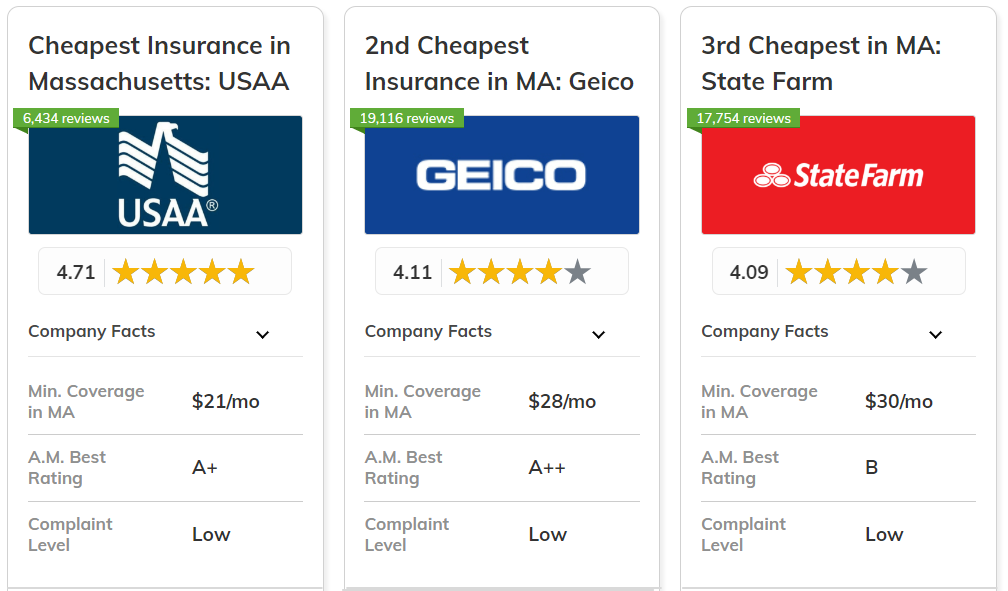
Massachusetts drivers usually pay less than many motorists nationwide, but the bill still shifts fast depending on the car, the insurer, and the person behind the wheel. Knowing the typical price bands makes it easier to spot a quote that feels fair instead of inflated.
For a practical benchmark, liability-only coverage in Massachusetts often runs about $55 to $95 per month, or roughly $660 to $1,140 per year. A policy built around the state’s minimum required coverage is commonly close to that same range, often landing at $50 to $85 monthly and $600 to $1,020 annually. Full coverage, which typically adds collision and comprehensive protection, usually costs much more at around $125 to $210 per month, or about $1,500 to $2,520 per year. These are broad averages, not fixed prices, so real quotes can land above or below them.
What Typical Drivers Often Pay at a Glance
The averages below show how premiums can move by driver profile even before optional add-ons enter the picture. In Massachusetts, insurers often reward a clean driving record, steady credit-related indicators where permitted, lower-risk vehicles, and consistent coverage history, while higher-risk signals can push costs up quickly.
| Driver type | Coverage level | Estimated monthly cost | Estimated annual cost |
|---|---|---|---|
| Safe adult driver | Minimum coverage | $50-$75 | $600-$900 |
| Safe adult driver | Full coverage | $125-$170 | $1,500-$2,040 |
| Young driver | Liability-only | $95-$150 | $1,140-$1,800 |
| Driver with recent incident | Full coverage | $180-$260 | $2,160-$3,120 |
What creates the spread between insurers and quotes? The biggest reasons are usually tied to how each company measures risk and how expensive your car would be to repair or replace.
- Insurer pricing models: each carrier weighs claims history, location, mileage, and prior coverage differently.
- Vehicle type: newer, luxury, sporty, or theft-prone models usually cost more to insure.
- Personal risk signals: age, driving history, lapse history, and accident or violation records can all raise rates.
- ZIP code patterns: dense traffic, weather losses, and local claim frequency can change premiums even within the same state.
Coverage tiers can sound similar on a quote sheet, but they protect very different things. Here is what drivers usually get at each level.
- Minimum coverage: usually includes the state-required core protections, such as bodily injury liability, property damage liability, personal injury protection, and uninsured motorist bodily injury.
- Liability-only: generally covers injuries or damage you cause to others, but not repairs to your own vehicle after a crash you cause.
- Full coverage: usually combines liability coverage with collision and comprehensive, helping cover your own car after crashes, theft, vandalism, fire, or certain weather events.
Pro Tip: If one Massachusetts quote seems dramatically cheaper, check whether it is minimum coverage or true full coverage before comparing numbers. A lower premium can hide much thinner protection.
Main Factors That Affect Insurance Prices
Massachusetts car insurance prices are not pulled from thin air. They are shaped by a risk story insurers build around you, your car, and where you drive every day.
Even in the same state, two drivers with similar vehicles can see very different premiums because insurers score risk in different ways. One company may care more about recent violations, while another may put heavier weight on garaging location, annual mileage, or prior claims activity.
Why One Driver Looks Cheap and Another Looks Costly
Age, driving behavior, location, vehicle choice, and insurance history all influence what an insurer expects it may pay out in future claims. In Massachusetts, pricing can also reflect territory-based loss patterns and, where legally and operationally applicable, certain credit-related or insurance-based rating considerations used by some carriers in broader underwriting models. The result is simple: small profile changes can trigger noticeable price jumps.
| Factor | Effect on Price | Why It Matters | Example Scenario |
|---|---|---|---|
| Age | Younger drivers usually pay more | Less driving experience often means higher claim risk | A 19-year-old typically pays more than a 40-year-old with a clean record |
| Driving record | Tickets and accidents can raise rates fast | Violations suggest a greater chance of future losses | Adding one speeding ticket may push quotes noticeably higher at renewal |
| ZIP code | Dense areas often cost more | More traffic, theft exposure, and claim frequency can increase risk | Moving from a quiet suburb to Boston can raise premiums |
| Credit-related factors | Varies by insurer and compliance rules | Some carriers use broader risk indicators where permitted | Two similar drivers may get different quotes because carriers model risk differently |
| Mileage | Higher annual miles can mean higher cost | More time on the road creates more chances for a claim | A commuter driving 15,000 miles may pay more than someone driving 6,000 |
| Vehicle model | Luxury, performance, or costly-to-repair cars often cost more | Repair bills, theft rates, and safety performance affect losses | An SUV with strong safety ratings may be cheaper to insure than a sports sedan |
| Claims history | Past claims can increase premiums | Insurers may view repeated claims as a sign of elevated future risk | Two recent comprehensive claims can make a driver look more expensive to insure |
Here are the changes most likely to move your premium up or down:
- A new speeding ticket: often raises rates because it changes your risk profile immediately.
- A move to a busier ZIP code: can increase costs even if your driving record stays spotless.
- More annual mileage: may lead to a higher quote because exposure rises with time on the road.
- A different car: switching to a model with expensive parts or higher theft rates can lift premiums.
Quoted prices can differ dramatically for the same driver because insurers do not all measure risk the same way. Some are more competitive for clean drivers in urban areas, some favor low-mileage households, and others price aggressively for certain vehicle types. That is why one insurer may view your profile as moderate risk while another sees it as expensive.
Pro tip: If your quote spikes after a life change, do not assume every insurer will react the same way. Re-shopping after a ticket, move, or vehicle change can uncover surprisingly different prices for essentially the same coverage.
Massachusetts Coverage Rules and Minimum Requirements
Massachusetts does not let drivers guess their way through insurance. Before you register and drive legally, your policy must include specific coverages that protect both you and other people on the road.
The key thing to know is this: the state minimum is the legal floor, not always the smart target. These required coverages are designed to satisfy Massachusetts rules, but they may leave expensive gaps after a serious crash, lawsuit, theft, or weather-related loss.
What the Law Requires Before You Hit the Road
Massachusetts requires four basic parts in a standard auto policy. Bodily injury to others pays when you injure someone in an accident you cause. Personal injury protection (PIP) helps cover medical costs and certain lost wages for you and your passengers, regardless of fault. Bodily injury caused by an uninsured auto steps in if another driver hurts you and has no insurance. Damage to someone else’s property pays for repairs or replacement when you damage another person’s car, fence, building, or similar property.
| Coverage type | State minimum | Purpose | When it helps |
|---|---|---|---|
| Bodily Injury to Others | $20,000 per person / $40,000 per accident | Pays injuries you cause to other people | If you are at fault and another driver or passenger is hurt |
| Personal Injury Protection (PIP) | $8,000 per person | Helps with medical bills, lost wages, and some replacement services | After a crash, no matter who caused it |
| Bodily Injury by Uninsured Auto | $20,000 per person / $40,000 per accident | Protects you if an uninsured driver injures you | When the at-fault driver has no liability coverage |
| Damage to Someone Else’s Property | $5,000 per accident | Pays for property damage you cause | If you hit another car, mailbox, garage, or roadside structure |
Those mandatory coverages are different from optional protections. Required coverage mainly protects against basic legal and injury-related obligations. Optional coverages protect your own vehicle, convenience, and out-of-pocket exposure. Collision helps repair your car after an at-fault crash. Comprehensive helps with theft, vandalism, fire, falling objects, or storm damage. Rental reimbursement helps pay for a temporary car while yours is being repaired. Roadside assistance helps with towing, jump-starts, lockouts, or flat tires.
Pro tip: If your car has meaningful value, minimum required coverage alone can feel cheap until the first major claim. One bad accident can cost far more than the state minimums.
For many drivers, minimum coverage may not be enough in real-world situations such as these:
- You cause a crash involving a newer vehicle, and the $5,000 property damage limit is nowhere near enough.
- You are sued after seriously injuring another person, and medical costs rise above the bodily injury limits.
- Your own car is financed or leased, which often means the lender expects collision and comprehensive.
- Your vehicle is stolen, flooded, or damaged by hail, and minimum required coverage pays nothing for your car.
- You rely on your vehicle daily and need a rental car or towing help, but those services are not included automatically.
- You have savings, a home, or future income worth protecting, making higher liability limits a smarter shield.
Price Comparisons by Driver Type and Situation
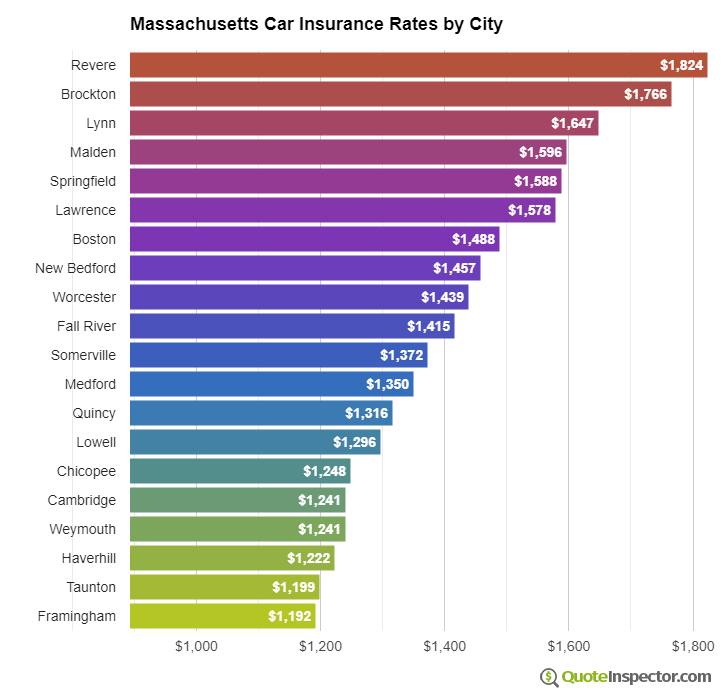
In Massachusetts, the price gap between one driver profile and another can be dramatic. A clean-record adult may pay a manageable rate, while a teen or high-risk driver can face premiums that feel more like a second car payment.
That spread happens because insurers price not just the car, but the likelihood of future claims. Age, experience, household setup, violations, and policy history all shape what a carrier sees as routine risk versus expensive exposure.
How Life Stage and Risk Profile Reshape the Bill
The ranges below are broad estimates for Massachusetts drivers and are best used as a practical comparison tool, not a guaranteed quote. Even so, they reveal a clear pattern: experience, stability, and a clean history usually pull premiums down, while violations, inexperience, and coverage gaps push them up fast.
| Driver situation | Typical premium range | Risk level | Cost-saving note |
|---|---|---|---|
| Teen driver | $3,500-$7,000+ | Very high | Usually cheaper on a family policy than alone |
| New driver | $2,200-$4,800 | High | Proof of prior driving experience can help |
| Senior driver | $1,200-$2,400 | Low to moderate | Low mileage often supports lower pricing |
| Married driver | $1,100-$2,200 | Low to moderate | Bundling vehicles often softens the total cost |
| High-risk driver | $3,000-$8,000+ | Very high | Comparison shopping matters most in this group |
| Clean-record driver | $1,000-$1,900 | Low | Best rates usually go to long-term claim-free drivers |
Premiums can jump sharply after an at-fault accident, especially if property damage or injuries are involved. A DUI offense is often one of the costliest events, potentially doubling or tripling rates and shrinking the number of insurers willing to write the policy.
A lapse in coverage can also raise costs because insurers may read it as a sign of inconsistent payment or increased risk. By contrast, adding another vehicle does not always mean the bill doubles; multi-car pricing can spread risk and sometimes lowers the per-vehicle cost, though the total household premium still usually rises.
These sample situations show how the same state can produce very different insurance totals depending on who lives in the home, who drives most, and how often the vehicles are used.
- A married couple with two clean records and two commuter cars may pay less per car than two single drivers insured separately.
- Parents adding a licensed teen typically see the household premium rise steeply, but choosing an older, moderate-value car can reduce the hit.
- A retired senior who drives short local trips may land in a lower bracket than a same-age driver with long weekly highway mileage.
- A new Massachusetts resident with no recent U.S. insurance history may pay more at first, even with a good driving record elsewhere.
- A driver with one accident and one lapse in coverage often pays noticeably more than a driver with only one of those issues.
- A household adding a third car used rarely for errands may see a smaller increase than expected if all drivers already share one policy.
Pro Tip: If your profile has changed recently, such as getting married, removing a teen driver, or going from daily commuting to remote work, ask for a fresh quote right away. Those life shifts can change your price category faster than many drivers realize.
The most affordable Massachusetts premiums usually belong to drivers with stable coverage, clean histories, and predictable use patterns. The farther a situation moves from that model, whether through inexperience, violations, or household complexity, the more aggressively pricing tends to climb.
Ways to Lower Auto Insurance Costs in Massachusetts
Massachusetts drivers do not have to settle for a bloated premium. With a few smart moves, you can trim costs while still keeping the protection that matters when a crash, theft, or lawsuit hits.
The key is to lower your insurer’s risk profile without stripping away useful coverage. That usually means combining discounts, adjusting out-of-pocket costs carefully, keeping your record clean, and comparing policies line by line so the cheaper quote is truly a better value.
Smart Savings Moves That Keep Real Protection Intact
Start with the changes that create the biggest impact. Bundling auto with renters, condo, or home insurance often unlocks a sizable discount. Raising your deductible can lower the premium too, but only choose a deductible you could comfortably pay after an accident. Over time, improving your driving history by avoiding tickets and claims can move you into better pricing tiers. Vehicle choice matters as well: cars with strong safety ratings, modest repair costs, and low theft rates are usually cheaper to insure than luxury, performance, or frequently stolen models.
Discounts can stack, which is why it pays to ask directly instead of waiting for the insurer to volunteer them. Common savings opportunities include:
- Safe driver discount for a clean record and fewer claims.
- Multi-policy discount for bundling auto with home, renters, or condo coverage.
- Low-mileage discount if you drive fewer miles each year.
- Student discount for good grades or students away at school without a car.
- Anti-theft discount for alarms, tracking systems, or factory security features.
- Paperless discount for e-documents and automatic account management.
- Paid-in-full discount for paying the full term upfront instead of monthly installments.
Pro tip: Ask every insurer for a full discount review once a year. A newly shorter commute, improved credit-based rating where allowed, or a teen with good grades can change your price more than you expect.
| Savings method | How it works | Possible tradeoff | Best fit driver |
|---|---|---|---|
| Bundle policies | Combines auto with home, renters, or condo for a discount | May not be cheapest if one policy is overpriced | Homeowners and renters with multiple policies |
| Raise deductible | Lowers premium by increasing what you pay after a claim | Higher out-of-pocket cost after an accident | Drivers with emergency savings |
| Choose a lower-risk car | Safer, cheaper-to-repair vehicles often cost less to insure | Less luxury, speed, or specialty features | Shoppers replacing or buying a vehicle |
| Improve driving record | Fewer violations and claims can reduce rates over time | Savings may take time to appear | Drivers rebuilding from prior surcharges |
When comparing quotes, use a method that protects you from false bargains. Follow these steps:
- Gather the same driver details, vehicle information, mileage, and garaging address for every quote.
- Match the same liability limits, collision, comprehensive, uninsured motorist options, and deductible levels across insurers.
- Check add-ons carefully, including roadside assistance, rental reimbursement, gap coverage, and glass coverage, so one quote is not cheaper simply because it includes less.
- Review company reputation for claims handling, billing flexibility, and customer service, not just the headline premium.
- Ask each insurer to apply all available discounts, then request the final price in writing.
- Compare the annual total cost, payment fees, and deductible exposure before choosing the best overall value.
Pro tip: If you want to cut premium fast, test two deductible levels and remove only optional extras you truly would not use. Do not slash liability protection just to make the quote look smaller.
How to Shop for the Best Policy and Estimate Personal Cost
The fastest way to find the right Massachusetts auto policy is to shop with intention, not guesswork. A few smart comparisons can reveal whether a lower premium is a real bargain or just thinner protection dressed up as savings.
Start by collecting quotes from multiple insurers using the same driver and vehicle information each time so the prices are truly comparable. Then review each quote’s declarations page, where the insurer lists limits, deductibles, vehicles, drivers, discounts, and endorsements. This page is the truth serum of insurance shopping: it shows whether one quote is cheaper because of a higher deductible, reduced optional coverages, or lower liability limits. When estimating your personal cost, balance your monthly budget with your ability to absorb out-of-pocket costs after an accident.
Build a Quote Comparison System That Actually Works
Use a side-by-side method instead of chasing the lowest number. Compare deductibles first, because a $500 deductible and a $1,000 deductible can create a noticeable premium difference. Next, compare liability, collision, comprehensive, uninsured or underinsured motorist protection, and any extras such as rental reimbursement. If your savings cushion is thin, a lower deductible may protect your finances better; if you can comfortably handle a larger repair bill, a higher deductible may lower your premium. Most importantly, choose limits that match your risk tolerance and assets, not just the minimum line on the quote.
| Shopping step | Information needed | What to compare | Mistake to avoid |
|---|---|---|---|
| Request quotes | Same drivers, address, vehicle, mileage, and coverage choices | Total premium and listed discounts | Changing details between quotes |
| Read declarations pages | Coverage limits, deductibles, endorsements, excluded drivers | What each policy actually includes | Assuming “full coverage” means the same thing everywhere |
| Adjust deductibles | Emergency savings and repair budget | Premium difference at $500, $1,000, or other levels | Choosing a deductible you could not pay tomorrow |
| Match limits to needs | Household assets, commute, car value, comfort with risk | Liability limits and optional protections | Buying only based on the cheapest monthly price |
Before requesting quotes, gather the details that make estimates more accurate and speed up the process. A complete checklist helps you avoid revised prices later.
- Documents: current insurance declarations page, driver’s license numbers, vehicle registration, and lender or lease information if applicable.
- Vehicle details: year, make, model, VIN, annual mileage, parking location, safety features, and whether the car is owned, financed, or leased.
- Driver history: names of household drivers, license status, prior claims, violations, accidents, and any recent lapses in coverage.
- Coverage preferences: desired liability limits, deductible comfort level, collision and comprehensive choices, rental reimbursement, roadside help, and uninsured motorist preferences.
Example: A Boston-area driver gets three quotes for the same sedan. Quote A looks cheapest at $1,420 per year, but it carries a $1,000 collision deductible and lower liability limits. Quote B is $1,560 with a $500 deductible and stronger liability protection. Quote C is $1,690 with extra add-ons the driver does not need. After reviewing the declarations pages, the driver chooses Quote B because the added $140 per year cuts potential out-of-pocket repair costs in half and provides a more comfortable liability cushion. The “best” policy is not the lowest sticker price; it is the one that fits both budget and real-world risk.
Closure
Massachusetts auto insurance prices are not random; they are a reflection of risk, coverage choices, and how carefully you compare offers. The most persuasive strategy is not chasing the cheapest number, but choosing the policy that protects your budget before and after a crash. Compare limits, deductibles, and discounts side by side, and you will turn a confusing expense into a well-planned financial advantage.
Frequently Asked Questions
What is the average cost of auto insurance in Massachusetts?
Minimum coverage often ranges from about $420 to $900 per year, while full coverage commonly falls between $1,320 and $2,640 annually.
Why do quotes vary so much between insurers?
Each insurer weighs risk differently, using factors like accidents, location, vehicle type, mileage, and prior claims to set rates.
What coverage is required in Massachusetts?
Drivers typically need bodily injury liability, personal injury protection, bodily injury caused by an uninsured auto, and property damage liability.
Is minimum coverage enough for most drivers?
Not always. It may leave you exposed after a serious accident, expensive vehicle damage, or lawsuits that exceed state minimum limits.
How do tickets or accidents affect premiums?
A speeding ticket, at-fault crash, DUI, or lapse in coverage can sharply raise rates because insurers view them as signs of higher future risk.
What are the best ways to lower insurance costs?
Bundle policies, raise deductibles carefully, maintain a clean record, drive fewer miles, ask about discounts, and compare multiple quotes regularly.
What should I prepare before shopping for quotes?
Have your driver details, vehicle VIN, mileage estimate, prior policy information, claims history, and preferred coverage limits ready.