john hancock gold travel insurance is built for travelers who want more than bare minimum protection. It often suits international vacationers, cruise passengers, families, and anyone booking a higher-cost trip who wants help with trip cancellation, interruption, emergency medical care, baggage issues, and travel delays.
Think of it as the practical middle path between stripped-down budget coverage and expensive premium plans. Its appeal usually comes from balanced benefits, useful travel assistance, and stronger everyday protections for real disruptions like illness, severe weather, missed connections, or lost luggage. Before buying, compare limits, exclusions, and timing rules so the plan works for your exact journey, not just the brochure promise.






John Hancock Gold Travel Insurance Overview
John Hancock Gold Travel Insurance is the middle-ground plan many travelers want when “bare minimum” feels risky but premium-level extras feel unnecessary. It is built for people who want meaningful protection for their trip investment, health, and schedule without stepping into the highest-priced tier.
The Gold plan generally suits international travelers, families, cruisers, and travelers booking prepaid flights, hotels, or tours who want broader reassurance than entry-level coverage. In practical terms, it is designed to help when a trip is canceled before departure, cut short after it starts, disrupted by delays, or complicated by medical issues or baggage problems. That balance of trip protection and on-the-road support is what often makes Gold more appealing than stripped-down travel insurance.
Why Gold Feels Like the Smart Middle Lane
At its core, John Hancock Gold bundles the protections travelers ask about most: trip cancellation for covered reasons before departure, trip interruption if plans are forced to end early, emergency medical and evacuation support if illness or injury strikes away from home, baggage coverage for lost or delayed belongings, and travel delay benefits for unexpected overnight or meal costs during disruptions. For travelers who have invested real money in a trip, those benefits can turn a chaotic setback into a manageable detour.
What commonly makes the Gold plan stand out versus basic travel coverage is its sense of balance. Entry-level plans may focus mainly on cancellation and limited delay benefits, while Gold typically feels more robust because it combines stronger medical-oriented protection, wider trip disruption support, and more usable baggage and delay safeguards. That makes it especially attractive for travelers who are not just protecting deposits, but also protecting the experience of the trip itself.
The major protection areas are easier to understand when viewed side by side:
| Benefit | What It Covers | Typical Use Case | Important Notes |
|---|---|---|---|
| Trip Cancellation | Nonrefundable prepaid trip costs if a covered issue forces cancellation before departure | A sudden illness, family emergency, or other covered event prevents travel | Coverage depends on listed covered reasons and documentation |
| Trip Interruption | Unused trip costs and sometimes extra transportation expenses after departure | You must return home early due to illness, emergency, or major disruption | Often one of the most valuable protections for expensive itineraries |
| Emergency Medical | Eligible medical treatment costs for sickness or injury during the trip | You need urgent care abroad where your regular health plan offers limited help | Useful for international travel where out-of-pocket costs can spike fast |
| Baggage and Delay | Loss, damage, theft, or delayed arrival of luggage and essential items | Your checked bag misses a connection and you need clothes and toiletries | Item limits and receipts may matter for reimbursement |
If you are comparing Gold with basic plans, these are the traits that usually drive its popularity:
- Better all-around balance between trip cost protection and health-related travel risks.
- More confidence for international travel, where medical access and evacuation concerns matter more.
- Stronger disruption value for complex itineraries with connections, tours, or cruises.
- Broader day-of-travel usefulness beyond simple cancellation-only protection.
For many travelers, that is the real appeal: Gold is not just about refunding a missed trip, but about preserving momentum when travel becomes messy. It speaks most clearly to travelers who want practical, layered protection and would rather spend a bit more upfront than absorb a much bigger surprise later.
Pro Tip: Gold often makes the most sense when your trip includes sizable prepaid costs, international travel, or multiple moving parts. The more connections, reservations, and deadlines involved, the more valuable mid-tier disruption protection tends to feel.
Coverage Details, Limits, and Inclusions
John Hancock Gold Travel Insurance is built to turn trip chaos into manageable setbacks, not financial disasters. Its value shows up when a delayed flight becomes a missed cruise, a fever strikes overseas, or luggage vanishes between connections.
Most protections fall into a few core buckets: trip costs, health-related emergencies, transportation interruptions, and baggage problems. The important part is not just whether a benefit exists, but how it pays—some benefits reimburse prepaid losses after documentation, while others cover emergency expenses up to a stated maximum if a covered event triggers the claim.
How the Protection Stack Works on the Ground
In real travel use, coverage usually starts with canceled or interrupted plans, then extends to travel delays, medical issues, and property loss. For example, a severe storm that shuts down an airport may trigger trip delay benefits for meals and lodging, while a sudden illness before departure may support trip cancellation reimbursement for nonrefundable bookings. Abroad, emergency accident and sickness medical coverage can help with doctor visits or hospital care, and emergency evacuation becomes critical if local treatment is inadequate or transport to a better facility is medically necessary.
Before buying, compare the benefit ceiling, per-person cap, reimbursement method, and trigger conditions. A short domestic getaway may need modest delay and baggage protection, while an international itinerary or cruise often needs stronger medical evacuation limits because transport by air ambulance can be extraordinarily expensive.
| Benefit Category | How It Helps | What to Review | Who Feels the Limit Most |
|---|---|---|---|
| Trip Cancellation / Interruption | Reimburses prepaid, nonrefundable trip costs after a covered illness, injury, or major disruption | Covered reasons, percentage reimbursed, proof of loss | Families, cruises, expensive long-haul trips |
| Travel Delay | Pays for meals, hotel, and essentials after a qualifying delay such as severe weather or missed connection | Minimum delay hours, daily caps, receipt requirements | Short vacations with tight schedules |
| Baggage Loss / Delay | Reimburses lost items or temporary essentials when bags arrive late | Per-item limits, valuables sub-limits, airline reports | Families and travelers with gear-heavy packing |
| Emergency Medical | Covers treatment for unexpected sickness or injury during the trip | Deductibles, primary vs secondary coverage, provider rules | International travelers |
| Emergency Evacuation | Arranges and pays for medically necessary transport | High maximums, authorization terms, destination rules | Cruise and remote-destination travelers |
Use this checklist to scan what is typically included, what may be limited, and what upgrades are worth considering for a more complex itinerary.
- Common inclusions: trip cancellation, trip interruption, travel delay, missed connection support, baggage loss, baggage delay, emergency medical, and emergency evacuation.
- Covered-event examples: doctor-advised cancellation due to illness, severe weather grounding flights, a missed cruise embarkation after a carrier delay, stolen baggage, or a medical emergency abroad.
- Typical exclusions or limits to watch: foreseeable events, undocumented losses, high-value items above sub-limits, and delay claims that do not meet the waiting period.
- Optional add-ons often worth checking: rental car damage, higher medical limits, sports coverage, or cancel-for-any-reason style upgrades where available.
Pro Tip: If your trip includes a cruise, multiple flight connections, or travel outside your home country, prioritize medical evacuation and interruption limits over baggage perks. Those are the benefits that can protect against the biggest financial shock.
Benefit limits matter differently by trip type. A couple on a three-day city break may care most about delay reimbursement and baggage essentials, because a small cap can still solve the problem. A family heading overseas, however, can hit cancellation and medical limits faster because several travelers, multiple hotel rooms, and rebooking costs stack up quickly. Cruise travelers should read connection rules closely, since a missed departure can create cascading transportation and lodging expenses that lower-tier limits may not absorb well.
Exclusions, Restrictions, and Pre-Existing Condition Rules

John Hancock Gold can look reassuring on paper, but the real value lives in the fine print. Before you count on reimbursement, you need to know what the policy does not protect as much as what it does.
Like most travel insurance plans, this policy follows a rule-heavy structure: covered events must fit the contract language, excluded events stay excluded even when the loss feels legitimate, and deadlines matter. Travelers who skip these details often discover too late that a cancellation reason, medical issue, or missing document can turn an expected claim into a denial.
Fine-Print Triggers That Change the Outcome
The biggest restrictions usually center on foreseeable events, excluded activities, and pre-existing medical conditions. Standard exclusions often include losses tied to known storms before purchase, government restrictions not covered by the plan wording, intoxication or drug misuse, risky or extreme sports unless specifically covered, routine medical care, and travel taken against medical advice. Policy language may also limit benefits when a traveler ignores physician instructions or cannot show that an event directly caused the loss.
Pre-existing condition rules are especially time-sensitive. A waiver may be available if you buy the policy soon after making the initial trip deposit, insure the full nonrefundable trip cost, and remain medically able to travel when purchasing. Miss that purchase window, and a later claim connected to a prior illness, symptom, diagnosis, or medication change may be excluded. Even when a waiver applies, travelers should confirm exactly how the insurer defines the look-back period and who must meet the eligibility rules.
Claims are also denied for reasons that surprise people because they feel personal, not optional. Common problem areas include the following:
- Canceling from fear of travel, changing plans, or deciding the trip no longer feels worth it.
- Stopping travel because of a non-covered work conflict, visa issue, or known event announced before coverage began.
- Submitting incomplete proof, such as missing receipts, physician statements, supplier invoices, or proof of the original trip payment date.
- Reporting a loss late or failing to document when the illness, delay, or interruption actually started.
| Restriction | Description | Impact on Traveler | Review Tip |
|---|---|---|---|
| Known events | Issues announced before you buy, such as named storms or public disruptions, may be excluded. | You may not recover cancellation or delay costs tied to a foreseeable event. | Check the policy purchase date against event announcement dates. |
| Pre-existing conditions | Claims linked to prior medical issues may be excluded unless a waiver applies. | Medical or cancellation claims can fail even when the condition worsens unexpectedly. | Verify waiver deadlines, look-back rules, and full-trip-cost requirements. |
| High-risk activities | Certain sports or adventure excursions may fall outside standard coverage. | Injuries during excluded activities may leave you paying out of pocket. | Review activity exclusions before booking excursions. |
| Documentation gaps | Insufficient records can prevent the insurer from validating the claim. | Even a valid event may be denied without proof. | Keep receipts, medical notes, and carrier notices from day one. |
Caution points: Do not assume “sick” automatically means covered, especially if symptoms existed before purchase. Read the definitions for “pre-existing condition,” “medically necessary,” and “covered reason” word for word.
Policy-reading tip: Match your actual trip risks to the exclusion list before buying, not after a problem happens. If a benefit depends on buying early, treat the initial trip deposit date as a hard deadline trigger.
Common misunderstanding: Many travelers think any cancellation is reimbursable; in reality, reimbursement usually requires a specifically listed covered reason plus timely documentation.
Smart travelers treat exclusions as the decision engine of the policy, not a footnote. If your trip involves a chronic condition, expensive prepaid bookings, or adventure plans, reviewing those restrictions in advance is often the difference between having backup and merely having paperwork.
Pricing Factors and Value Comparison
Price is not random here; it moves with the risk profile of your trip. John Hancock Gold often lands in the middle tier, where cost rises beyond bare-bones plans but can feel justified when a trip has more money, more moving parts, or more chance of disruption.
Five factors usually shape the premium most: traveler age, total trip cost, destination, trip length, and number of travelers. Older travelers commonly see higher rates because medical claims are statistically more likely. A more expensive trip increases the amount that may need reimbursement. International or remote destinations can raise pricing if medical transport or care would be costlier. Longer travel windows create more time for something to go wrong. Adding more travelers increases total cost, though per-person value may improve when one policy covers a couple or family.
Where Gold Sits on the Value Ladder
Think of Gold as the plan for travelers who want noticeably stronger protection without jumping all the way to top-shelf pricing. Budget plans usually appeal on price alone, but they may offer thinner trip interruption benefits, lower medical caps, or fewer extras. Premium plans can push limits higher and add richer add-ons, yet not every traveler needs that ceiling. Gold tends to make the most sense when the trip is important enough that a small savings on premium would feel insignificant next to a canceled cruise, an overseas clinic bill, or a missed connection that snowballs into hotel and rebooking costs.
That trade-off becomes clearer in real situations. If a solo traveler books a short domestic weekend, a basic plan may be enough because the financial exposure is modest. If a couple prepays a multi-city Europe itinerary with nonrefundable hotels, rail tickets, and excursions, paying more for broader protection can be smart because one interruption could affect several bookings at once. For a family flying to an island resort or a cruise passenger tied to strict departure timing, the extra premium can act like a buffer against expensive domino effects.
| Plan Level | Typical Strengths | Potential Drawbacks | Best For |
|---|---|---|---|
| Budget | Lower upfront cost, simple protection for basic trips | Lower limits, fewer comfort features, less room for complex disruptions | Cheap domestic trips, light packing, flexible bookings |
| Gold | Balanced pricing, broader trip and medical value, stronger all-around safety net | Costs more than entry plans, may exceed needs for very short trips | Mid-to-high trip spend, international travel, cruises, family vacations |
| Premium | Higher ceilings, richer extras, stronger fit for costly or complicated itineraries | Higher premium, diminishing value on lower-risk trips | Luxury travel, seniors with bigger trip investments, long-haul itineraries |
Value changes by traveler type, so compare the premium to what you could realistically lose rather than choosing by price alone.
- Solo travelers: Gold stands out when one cancellation would leave you absorbing all prepaid costs yourself.
- Couples: It can be attractive when shared bookings multiply the financial hit of one delay or medical issue.
- Families: Broader protection may be worth it because more travelers means more chances for schedule or health disruptions.
- Seniors: Higher premiums can still deliver value when medical concerns and larger trip budgets raise the stakes.
- Cruise passengers: Gold often looks stronger because missed departures, port changes, and tight timelines can become expensive fast.
Pro Tip: When comparing plans, divide the premium by your total nonrefundable trip cost. If a slightly higher premium protects a much larger prepaid investment, the upgrade can be easier to justify.
Claims Process, Customer Support, and Real-World Usage
When travel goes sideways, the value of John Hancock Gold often shows up in the claim experience, not just the policy wording. Fast action, clean paperwork, and smart use of support channels can turn a stressful event into a manageable recovery.
In real-world use, the claims process is usually most successful when travelers document the problem immediately, save every receipt, and report losses or medical events to the right party before heading home. Think of it less as “filing paperwork later” and more as building your case in real time while the details are still clear, dated, and easy to verify.
From Incident to Reimbursement: A Practical Claim Trail
The strongest claims are organized claims. Whether the issue is a canceled trip, an overseas clinic visit, missing baggage, or a long delay at the airport, your goal is to create a simple evidence trail that proves what happened, what you paid, and what was not refunded.
Start with this workflow before and during travel so submission is smoother and processing is less likely to stall.
- Review your policy details and emergency contact information before departure.
- At the time of the event, document what happened with dates, screenshots, written notes, and names of staff or providers.
- Notify the airline, tour operator, hotel, police, or medical provider immediately if they are involved.
- Request official records such as cancellation notices, delay confirmations, baggage reports, or medical statements.
- Save itemized receipts for every covered out-of-pocket expense and note any refunds received.
- Contact emergency assistance when medical care, rebooking help, or document loss creates urgent complications.
- Submit the claim form with supporting records as soon as possible, then monitor for follow-up requests.
The table below shows the most common claim categories and what typically helps each one move faster.
| Claim Type | Required Documents | Submission Step | Processing Tip |
|---|---|---|---|
| Trip Cancellation/Interruption | Booking invoices, proof of payment, cancellation penalties, supplier notices, medical or employer documentation if relevant | Complete claim form and attach proof of nonrefundable costs plus cause of cancellation | Match every prepaid cost to a receipt and show what portion was refunded |
| Medical Expense | Doctor reports, diagnosis notes, itemized bills, prescriptions, payment receipts, other insurance statements if any | Submit treatment records and proof you paid eligible expenses | Ask providers for itemized English-language records when possible |
| Baggage Loss/Damage | Airline property irregularity report, baggage claim tags, purchase receipts, photos, repair or replacement estimates | Report to carrier first, then file insurer claim with supporting loss records | File the airline report before leaving the airport whenever possible |
| Travel Delay | Carrier delay notice, revised itinerary, receipts for meals, lodging, and transport | Provide delay proof plus eligible extra expense receipts | Keep only necessary, reasonable expenses and label them by date |
To stay organized, keep a digital and paper backup system. Store policy numbers, passport copies, itineraries, and emergency contacts in cloud storage and on your phone. During the trip, use one album for photos of receipts, one folder for email confirmations, and a simple note listing dates, amounts, and why each expense happened.
Pro Tip: Rename receipt photos with the date and purpose, such as “2025-07-18 airport hotel delay.” That tiny habit can save major time if the insurer asks for clarification.
Emergency assistance services can be especially valuable when the problem is bigger than reimbursement alone. They may help direct you to medical facilities, coordinate transport during a serious illness, support communication during travel disruption, or guide you after passport or document loss. In urgent situations, this service can reduce confusion first, while the claim paperwork follows with stronger records later.
Best Use Cases and Traveler Planning Guide
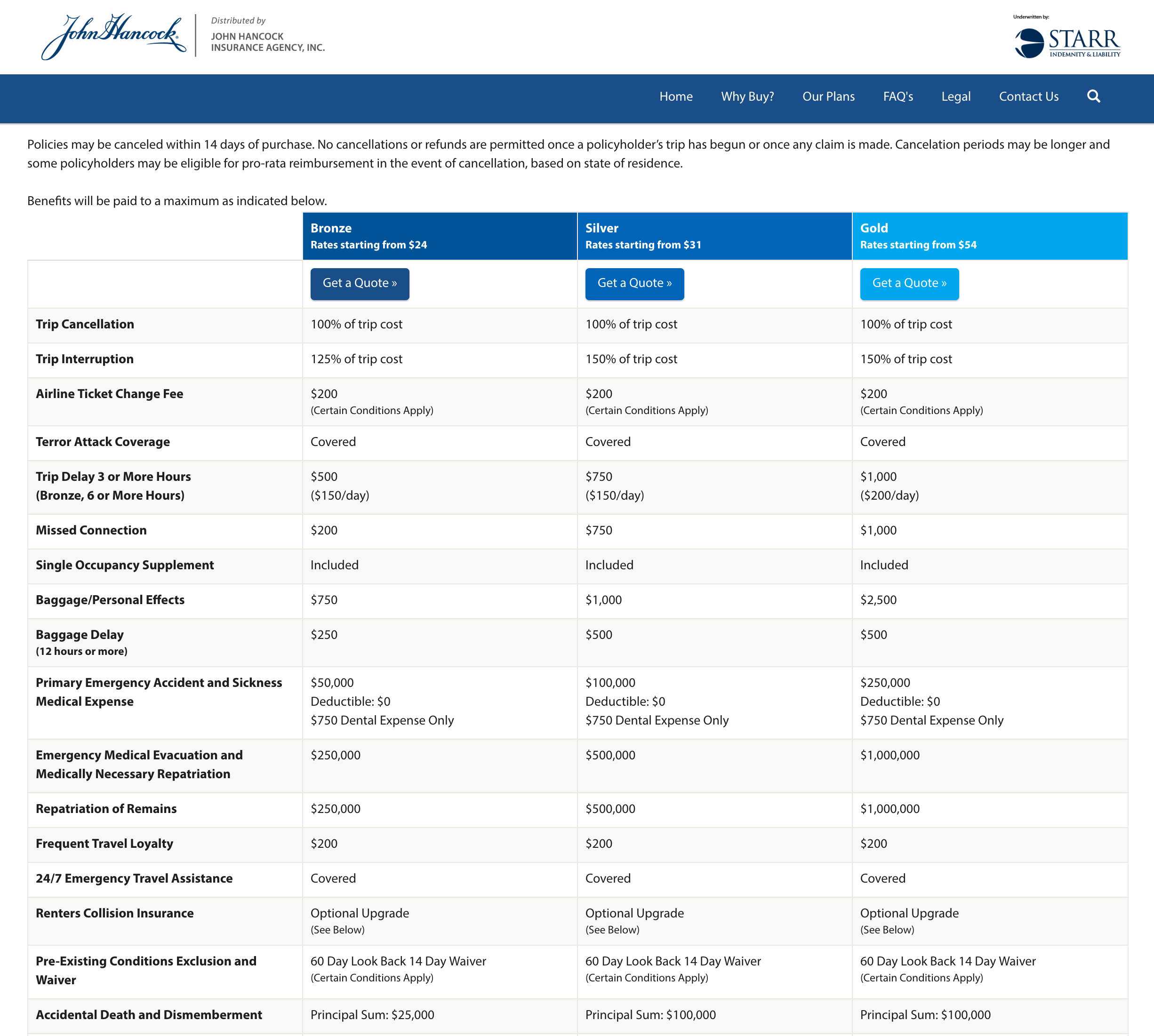
John Hancock Gold Travel Insurance tends to shine when a trip has enough moving parts, money, or distance that one disruption can trigger a chain reaction. Think of it as a practical buffer for travelers who want solid protection without jumping straight to a premium, top-tier policy.
This plan is often most useful for international vacations, cruises, multi-stop itineraries, and higher-cost trips where cancellations, delays, medical needs, or baggage issues could become expensive fast. It can fit travelers who want a balanced package of trip and travel protections, while ultra-budget travelers on simple domestic getaways may prefer lighter coverage and travelers with highly specialized needs may want a more robust or niche plan.
Trip-Match Blueprint for Smart Travelers
Where this plan fits best is not only about destination, but about how much can go wrong and how expensive the fallout would be. A cruise traveler may value schedule disruption and missed connection protection; a family heading overseas may care more about medical support and trip interruption; a couple on a big anniversary trip may focus on protecting prepaid costs. By contrast, a digital nomad on an open-ended journey, an extreme sports traveler, or someone carrying unusually high-value gear may find another plan type better aligned if they need specialized long-duration, adventure, or equipment-focused benefits.
Use this quick comparison to see where John Hancock Gold may feel most natural.
| Traveler Type | Trip Style | Priority Coverage | Plan Fit |
|---|---|---|---|
| Couple on a big international trip | Prepaid flights, hotels, tours | Cancellation and interruption | Strong fit |
| Cruise traveler | Fixed departure schedule | Delay, missed connection, medical support | Strong fit |
| Family with children | Multi-stop vacation | Baggage, delay, medical, interruption | Good fit |
| Backpacker or adventure-focused traveler | Flexible or activity-heavy trip | Specialized activity or long-stay coverage | May need another plan |
Before buying, match your trip risks to your real priorities rather than shopping by price alone.
- If your trip is expensive and prepaid, prioritize cancellation and interruption value.
- If you are leaving the country, check whether travel medical and emergency assistance matter more than baggage perks.
- If your itinerary includes cruises, layovers, or multiple cities, pay extra attention to delay and connection-related protection.
- If you have health history concerns, verify how the plan handles pre-existing condition eligibility and timing requirements.
- If you need CFAR-style flexibility, adventure sports benefits, or very high limits, compare with a more specialized or premium plan.
A sample use case makes the planning logic clearer. Imagine a traveler booking a two-week Italy-and-Greece vacation with a cruise segment, connecting flights, and several prepaid reservations. At booking, the plan can help protect the nonrefundable trip investment if a covered event forces cancellation. Near departure, if a weather event delays the first flight and threatens the cruise embarkation, delay or missed connection benefits may become especially valuable. During the trip, if baggage arrives late in Rome or a minor medical issue interrupts shore plans, the traveler may lean on baggage-delay or travel medical-related protections, depending on the exact covered event and policy terms. On the return, if a family emergency cuts the trip short, trip interruption support can matter just as much as cancellation protection did at the start.
Pro tip: John Hancock Gold often makes the most sense when your itinerary is structured, prepaid, and difficult to rebuild cheaply at the last minute.
Pro tip: If your trip is simple, low-cost, and mostly refundable, a leaner plan may be the smarter buy.
Final Summary
In the real world, good travel insurance is less about fear and more about freedom. john hancock gold travel insurance can be a smart match when you want solid protection without overpaying for features you may never use. Review benefit caps, pre-existing condition requirements, and claim documentation carefully, and you turn uncertainty into a confident travel strategy. The best trip is not only exciting, but also well protected.
Frequently Asked Questions
What does john hancock gold travel insurance usually cover?
It commonly includes trip cancellation, trip interruption, emergency medical expenses, baggage loss, baggage delay, and travel delay benefits, subject to policy limits and terms.
Who is this plan best for?
It often fits travelers taking international trips, cruises, multi-stop vacations, or more expensive bookings where cancellation and medical protection matter.
Are pre-existing conditions covered?
They may be covered only if the policy includes a waiver and you meet time-sensitive purchase requirements, so early purchase and policy review are essential.
What can cause a claim denial?
Claims may be denied for non-covered cancellation reasons, missing receipts, weak medical documentation, late filing, or exclusions such as known events or risky activities.
How does pricing usually work?
Cost is commonly influenced by traveler age, total trip price, destination, trip length, and number of travelers. Older travelers and costlier trips often pay more.
What documents are usually needed for a claim?
Typical documents include trip invoices, cancellation penalties, medical records, physician statements, baggage reports, delay notices, receipts, and proof of payment.
Is the Gold plan better than a basic travel plan?
Often yes for travelers who need broader protection, but value depends on your trip. A basic plan may be enough for a short low-cost getaway, while Gold can be worth it for bigger risks.