Choosing the “top three” insurance companies sounds simple, but the real answer depends on what you value most. Some rankings favor market share and brand size, while others highlight customer satisfaction, financial strength, claims service, or product variety. That is why a company leading in life insurance may not be the best in auto, health, home, or business coverage.
To compare wisely, look beyond famous names. Review sources often use customer reviews, complaint data, policy options, and pricing trends, while rating agencies focus on financial stability and long-term claim-paying ability. A smart buyer compares coverage details, exclusions, deductibles, digital tools, and support quality before deciding which insurer truly deserves a top-three spot.





Understanding What “Top Three Insurance Company” Can Mean
The phrase “top three insurance company” sounds simple, but it can point to very different winners depending on what you value most. A giant insurer may lead in size, while another earns its place through happier customers, faster claims, or stronger financial backing.
That is why smart readers should treat “top three” as a category with multiple lenses, not a fixed podium. Insurance companies are ranked by market share, customer satisfaction, financial strength, claims handling, and product variety, and each lens answers a different question: Who sells the most, who feels easiest to work with, who looks safest over time, and who offers the widest fit for real-life needs?
One Phrase, Many Scoreboards
When people search for the best insurers, they often mix together brand fame, personal experience, and published rankings. In practice, the standards vary sharply. Market share highlights scale and reach. Customer satisfaction reflects how policyholders rate service and value. Financial strength focuses on an insurer’s ability to pay future obligations. Claims handling looks at speed, fairness, and ease during stressful moments. Product variety rewards carriers that serve more situations, from bundled home and auto to niche business policies.
Major review sources and rating agencies also use different scorecards, so their “top three” lists may not match:
- Consumer review publishers: Often blend pricing, digital tools, complaints, coverage options, and survey feedback.
- J.D. Power-style satisfaction studies: Emphasize customer experience, billing, policy servicing, and claims interaction.
- AM Best: Prioritizes insurer balance-sheet strength and long-term operating performance.
- S&P Global or Moody’s: Focus on creditworthiness and capacity to meet financial commitments.
- NAIC complaint data: Compares complaint volume against company size, revealing service friction patterns.
The “top three” can also change by coverage type because each insurance category rewards different strengths. In life insurance, policy design, underwriting flexibility, and long-term stability matter heavily. In health insurance, provider networks, regional availability, and plan administration can outweigh brand size. In auto insurance, shoppers often care most about pricing, claims speed, and mobile convenience. In home insurance, catastrophe response, rebuild support, and endorsement depth become more important. In business insurance, risk specialization, policy customization, and industry-specific expertise may define the leaders.
Use this quick comparison to see why rankings can point in different directions:
| Ranking Factor | What It Measures | Why It Matters | Typical Data Source |
|---|---|---|---|
| Market share | Premium volume and customer base size | Shows scale, reach, and market presence | Industry reports, statutory filings |
| Customer satisfaction | Policyholder ratings on service and value | Signals everyday experience after signup | Surveys, review studies |
| Financial strength | Ability to meet claims and obligations | Helps gauge long-term reliability | AM Best, Moody’s, S&P |
| Claims handling | Speed, fairness, and ease of claims service | Defines value when coverage is actually used | Claims surveys, complaint data |
Pro Tip: If a ranking does not say what it measures, do not treat it as a final answer. The best insurer for one person’s car may be a poor fit for another person’s family health plan or small business policy.
Leading Insurance Companies Commonly Mentioned in Rankings
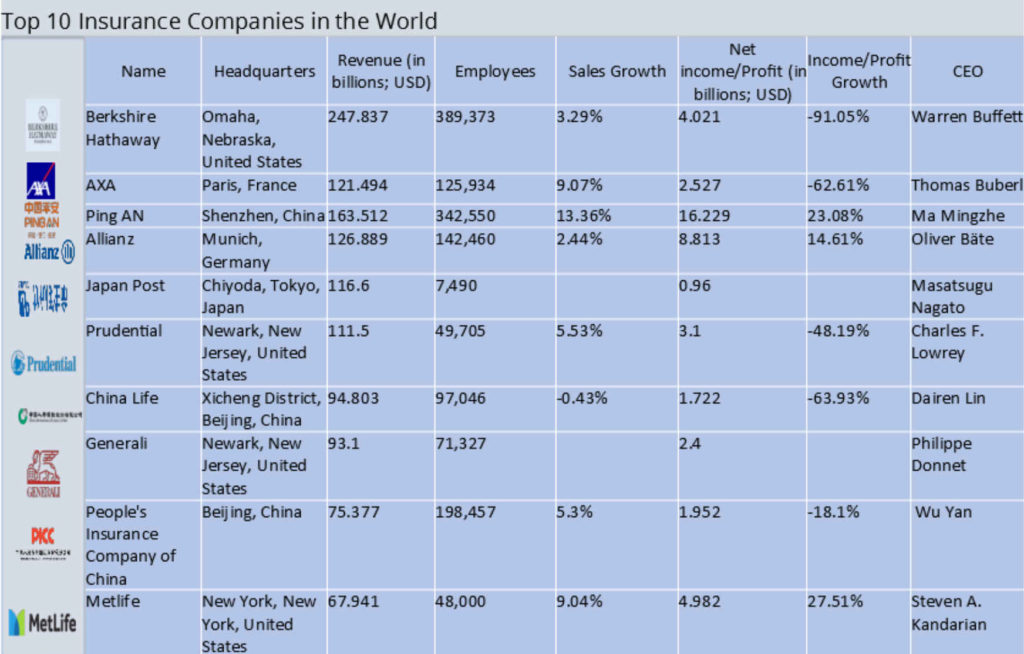
When people ask who belongs in the “top three,” the answer usually shifts by coverage type. A handful of insurers keep surfacing because they pair strong brand recognition with broad product lines, dependable service networks, and policies built for different life stages.
Rather than forcing one universal winner, it is more useful to look at the companies most often cited across life, auto, health, and property insurance. These names tend to stand out because they combine market presence, agent or digital accessibility, customizable coverage, and a reputation for meeting mainstream consumer needs.
Where Big-Name Insurers Consistently Shine
The companies below are commonly mentioned in national rankings and consumer shortlists. Their appeal is not just size; it is the ability to serve specific needs with recognizable strengths, whether that means extensive local agent support, highly digital policy management, broad provider access, or flexible bundling options.
Here is a practical way to see where frequently recognized insurers often stand out by insurance type:
- Life insurance: Northwestern Mutual is often praised for long-term planning support, strong advisor relationships, and permanent life policy options; New York Life is widely recognized for policy variety and estate-planning appeal; MassMutual is often noted for whole life strength and dividend-paying history.
- Auto insurance: State Farm remains a common favorite for agent availability, easy bundling, and broad driver appeal; GEICO is popular for competitive pricing and streamlined digital quotes; Progressive frequently stands out for rate tools, high-risk driver flexibility, and usage-based options.
- Health insurance: UnitedHealthcare is frequently highlighted for large provider networks and employer-plan reach; Blue Cross Blue Shield companies are often valued for geographic breadth and local plan familiarity; Kaiser Permanente is regularly recognized for integrated care where its service areas are available.
- Home and property insurance: Allstate is often chosen for coverage options and add-ons; State Farm is well known for dependable mainstream home coverage and bundling convenience; USAA is consistently admired by eligible military families for service quality and competitive protection.
Pro tip: A company that ranks highly in one category may be only average in another, so shoppers often get better results by matching the insurer to the coverage they need most instead of chasing one famous name for everything.
| Company Name | Primary Insurance Focus | Notable Strengths | Ideal Customer Profile |
|---|---|---|---|
| State Farm | Auto, home, life | Large agent network, easy bundling, broad national reach | Customers who want in-person guidance and multiple policies under one brand |
| GEICO | Auto | Competitive pricing, simple online tools, fast quote experience | Price-focused drivers who prefer digital self-service |
| Progressive | Auto | Flexible underwriting, comparison tools, strong nonstandard-driver appeal | Drivers seeking rate-shopping features or specialized auto coverage |
| Northwestern Mutual | Life, financial planning | Advisor-driven planning, strong life insurance reputation, long-term focus | Individuals building wealth and protection together |
| UnitedHealthcare | Health | Large networks, employer-plan visibility, broad product availability | Members who value provider access and plan variety |
| Allstate | Home, auto, property | Coverage options, endorsements, recognizable national brand | Homeowners wanting customizable protection and bundling choices |
What makes these insurers popular is the blend of reach, familiarity, and practical coverage design. Some win with local agents and hand-holding; others attract shoppers through lower rates, robust apps, or broad networks. That is why they appear again and again in rankings: they do not serve exactly the same customer, but each has a clear lane where it repeatedly earns attention.
How to Compare the Top Three Insurance Companies Fairly
The smartest buyer does not ask, “Which insurer is cheapest?” but “Which one still looks strong when the fine print starts talking?” A fair comparison turns glossy promises into visible trade-offs.
Put the three insurers side by side and score them using the same six lenses: premium, coverage limits, exclusions, claims process, digital tools, and support quality. This keeps you from overvaluing a low monthly price while missing smaller payout caps, slower claims handling, or narrow policy wording that can cost far more later.
The Side-by-Side Policy Filter
Start with the policy schedule, benefits summary, and full wording for each plan. Compare like for like: same insured person, same deductible target, similar riders, and equal payment frequency. Then trace the hidden differences: sub-limits for specific risks, waiting periods, co-pay clauses, non-covered conditions, claim filing deadlines, and whether renewals have a history of large premium jumps. A plan that looks similar on the front page can become much weaker once these details are lined up.
To judge real value beyond premium, calculate the total cost of using the policy. Look at deductibles, optional riders, no-claim or bundling discounts, and whether the insurer has a stable renewal pattern. A slightly higher premium may be the better deal if it gives broader protection, lower out-of-pocket exposure, and fewer surprise exclusions.
Use this simple review sequence before deciding:
- Collect the quote, benefit summary, and full policy wording from all three insurers.
- Match the core coverage so you are comparing equivalent plans, not mismatched versions.
- Highlight limits, waiting periods, exclusions, and claim conditions in each document.
- Check claims channels, average response speed, app usability, and support availability.
- Add the real annual cost: premium, deductible, rider fees, and likely renewal changes.
- Choose the policy with the strongest protection-per-dollar, not just the lowest sticker price.
Before you pick among three insurers, run through these checkpoints:
- Are the coverage limits high enough for your actual risk exposure?
- Do exclusions remove the very scenarios you care most about?
- Is the deductible affordable if you need to file a claim next month?
- Are important add-ons included automatically or sold as extra riders?
- Does the insurer offer fast digital claims, document upload, and status tracking?
- Can you reach a real support team easily when something urgent happens?
- Has the company shown stable renewals instead of sharp year-to-year increases?
Pro Tip: If two plans look nearly identical, the winner is often hiding in the exclusions page and claims rules, not in the marketing brochure.
| Comparison Category | What to Review | Warning Signs | Decision Tips |
|---|---|---|---|
| Price | Annual premium, payment fees, discounts | Very low price with stripped benefits | Compare total yearly cost, not monthly appeal |
| Coverage | Limits, sub-limits, riders, waiting periods | Low caps on common claims | Prioritize fit for your biggest risks |
| Claims Process | Documents required, turnaround time, claim channels | Vague timelines or complex paperwork | Favor simple, trackable, digital-first claims |
| Service Quality | App tools, chat/phone access, complaint patterns | Hard-to-reach support or repeated service complaints | Choose reliability when pressure is highest |
Fair comparison is disciplined comparison. When you review the same categories, read the wording line by line, and price the policy as it behaves in real life, the best of the top three becomes much easier to spot.
Financial Strength, Trust, and Claims Performance
A famous insurer name means little if it cannot still pay claims years from now. When people ask who belongs in the top three, financial strength and claims dependability often matter more than flashy pricing.
Insurance is a long promise, not a quick purchase. A company with strong reserves, disciplined underwriting, and durable earnings is better positioned to keep coverage stable, honor large claims after disasters, and avoid sharp service declines when markets turn volatile. That long-term reliability shapes real customer outcomes: fewer worries about delayed payments, fewer surprises during renewal, and more confidence that the policy will perform when life gets expensive.
The Trust Signals Behind the Promise
Trust is built from evidence, not slogans. Smart shoppers look at insurer ratings, complaint records, and payout reputation because those signals reveal whether a company is merely popular or truly dependable. Financial strength ratings from agencies such as AM Best, S&P, Moody’s, or Fitch can indicate whether an insurer has the capital to withstand stress. Complaint databases from state regulators and consumer agencies can show patterns around billing, denials, or poor communication. Meanwhile, a strong payout reputation often appears in customer reviews, claims satisfaction studies, and consistency during catastrophe events.
Claims performance deserves especially close attention because it is the moment when every policy promise gets tested. Compare insurers on these practical factors before calling one of them a top pick:
- Speed: How quickly the company acknowledges, reviews, and pays a valid claim.
- Transparency: Whether claim steps, timelines, and reasons for decisions are clearly explained.
- Documentation requirements: Whether the process feels reasonable or excessively burdensome.
- Settlement consistency: Whether similar claims are handled fairly across customers and situations.
Those details matter because a low premium can feel like a win until a stressful claim becomes slow, confusing, or unevenly handled. A truly leading insurer pairs acceptable pricing with systems that remain calm, clear, and responsive under pressure.
Pro Tip: Do not chase the cheapest policy in isolation. The better value is often the insurer that balances affordability with a stable balance sheet, credible ratings, and a claims process that pays fairly when you need it most.
Use the checkpoints below to judge trust more objectively instead of relying on brand familiarity alone:
| Trust Factor | Why It Matters | How to Verify It | Impact on Policyholders |
|---|---|---|---|
| Financial strength | Shows the insurer’s ability to pay future claims and survive major loss events. | Review AM Best, S&P, Moody’s, or Fitch ratings and outlooks. | Greater confidence in long-term coverage reliability. |
| Complaint record | Reveals patterns in service failures, denials, billing disputes, or delays. | Check state insurance department complaint ratios and consumer reports. | Helps avoid insurers with recurring customer friction. |
| Claims reputation | Indicates how the company behaves when customers are under pressure. | Compare claims satisfaction studies, reviews, and catastrophe-response feedback. | Improves odds of smoother, less stressful recovery. |
| Process consistency | Shows whether similar claims are treated fairly and predictably. | Read policy language, ask claims questions, and review settlement experiences. | Reduces unpleasant surprises and disputes during payout. |
Before buying, ask direct questions so the sales experience does not distract from the service reality. Focus on the parts of the policy journey that affect trust most:
- Ask how claims are filed, tracked, and escalated.
- Request examples of required documentation for common claim types.
- Check whether claim updates are digital, phone-based, or both.
- Review complaint history alongside the price quote, not after purchase.
The strongest insurance companies earn their place through staying power and claim credibility, not just market share. If a company scores well on financial resilience and handles claims with speed, clarity, and fairness, it deserves much more serious consideration than a cheaper rival with weaker trust signals.
Best Top-Three Picks by Customer Need and Situation
The “top three” insurance companies can shift fast once your real life enters the picture. A great pick for a growing family may be a poor fit for a first-time driver, a retiree, or a small business owner.
That is why smart shoppers do not chase brand fame alone; they match an insurer’s strengths to the pressure points that matter most. Lower premiums, wider protection, quicker claims help, and smoother digital tools all matter differently depending on what you own, who depends on you, and how much risk you can comfortably absorb.
Smart Matchups for Real-World Policy Goals
If you are comparing likely top-three contenders, the sharper question is not “Who is best overall?” but “Who is best for my exact situation?” Families often value bundling and dependable claims service, while seniors may care more about stable pricing and personalized support. Young drivers may prioritize discount opportunities, homeowners may want strong dwelling and catastrophe options, and small business owners usually need flexible liability and property protection in one place. Just as important, regional availability and state rules can reshape the leaderboard: a company that shines in one state may offer fewer products, different rates, or limited discounts in another.
Use the examples below as practical shortcuts when narrowing your top-three list.
- Families: A carrier with strong bundle discounts, easy multi-policy management, and responsive claims can be the best fit for balancing home, auto, and life coverage.
- Seniors: Companies known for agent support, simple policy options, and fewer surprise rate jumps may feel more valuable than flashy extras.
- Young drivers: Insurers offering telematics, safe-driver savings, and forgiving pricing for limited driving history often stand out most.
- Homeowners: A top option may be one with robust replacement-cost coverage, weather-related add-ons, and a solid repair network.
- Small business owners: Look for carriers with customizable business owner’s policies, liability protection, and fast certificate access online.
Pro Tip: A company can rank in the top three nationally and still be a weak local choice if it has thin agent networks, slower catastrophe response in your region, or state-specific coverage gaps.
These examples show how different customer needs point toward different insurer traits rather than one universal winner.
- A family with two cars and a mortgage may prefer a company that rewards bundling, offers accident forgiveness, and provides strong mobile claims tracking.
- A retiree on a fixed income may lean toward a carrier with stable renewal behavior, optional roadside benefits, and easy phone-based service.
- A college graduate buying first auto coverage may benefit most from usage-based pricing, good-student or safe-driver discounts, and a low deductible option.
- A homeowner in a storm-prone area may need an insurer with dependable catastrophe handling, optional flood or wind endorsements, and clear rebuilding terms.
- A local shop owner may rank a carrier highest if it combines general liability, property, and business interruption coverage with fast policy changes.
| Customer Type | Key Priority | Recommended Insurer Traits | Policy Features to Seek |
|---|---|---|---|
| Families | Value across multiple policies | Strong bundling, reliable claims, broad service network | Home-auto bundle, liability limits, accident forgiveness |
| Seniors | Stability and personal support | Consistent pricing, accessible agents, simple policy management | Roadside assistance, flexible billing, clear exclusions |
| Young Drivers | Affordable entry-level coverage | Telematics, discount depth, digital-first experience | Safe-driver app, low down payment, deductible options |
| Homeowners / Small Business Owners | Protection against bigger losses | Customizable coverage, fast claims, regional risk expertise | Replacement cost, endorsements, liability and interruption cover |
Visual Content and Content Structure for Reader Clarity

Readers trust comparisons faster when the page looks organized, balanced, and easy to scan. Smart visuals do more than decorate; they quietly guide attention toward what matters most.
For a topic like the top three insurance companies, clarity is part of credibility. A polished illustration, a logic-driven infographic, and a tightly structured layout help readers compare brands without feeling buried in jargon, ratings, or feature lists.
Design Blueprint for Fast, Confident Comparison
Create an illustration that places three leading insurance companies side by side in a professional card-based layout. Each company can sit in its own column with simple, recognizable icons: a headset for service, a shield for protection, a document-check or helping hand for claims support, and a bar chart or vault for financial stability. Keep spacing generous, labels short, and colors restrained so the visual feels authoritative rather than promotional.
The infographic should translate complexity into a clean decision map. Organize it around three layers: ranking criteria, buyer priorities, and key insurer differences. This allows readers to see not only who performs well, but also why a company may fit one person better than another.
To keep the article easy to absorb, break the section into short blocks with visible hierarchy. Use compact paragraphs for explanation, bullet points for fast scanning, and callout blockquotes where readers need a warning, caveat, or expert insight before making assumptions.
Use this simple visual plan when designing the section:
- Illustration area: three aligned company panels with matching icon positions for easy eye-tracking.
- Infographic area: ranking criteria first, buyer needs second, insurer distinctions third.
- Text flow: short section headers, short paragraphs, then bullets for details.
- Callouts: highlight limits of rankings, policy exclusions, and claim-experience variability.
Pro Tip: Never let a beautiful comparison graphic imply that one insurer is “best” for everyone. Visual clarity should sharpen judgment, not oversimplify it.
Wherever the article compares companies, ratings, or buyer profiles, use a responsive HTML table with up to four columns. That limit keeps mobile viewing clean while still allowing useful side-by-side reading. A practical format is: company, strongest advantage, ideal buyer, and watch-out point.
| Company | Service | Claims Support | Financial Stability |
|---|---|---|---|
| Company A | Strong agent guidance | Fast digital updates | High confidence rating |
| Company B | Efficient online tools | Broad help channels | Long-term market strength |
| Company C | Personalized assistance | Reliable follow-through | Solid reserve position |
For best readability, make the table stack gracefully on smaller screens, keep headings plain-English, and avoid overloading cells with full sentences. If buyer-profile comparisons are included, switch the columns to buyer type, top priority, best-fit insurer style, and caution point.
Follow this content structure to maintain momentum without losing depth:
- Open with a visual comparison snapshot.
- Explain what each icon or scoring category represents.
- Show a compact table for side-by-side distinctions.
- Add bullets for practical interpretation.
- Insert a blockquote when a nuance could change a reader’s decision.
Expert Tip: If two insurers look evenly matched, use the callout area to remind readers that pricing, regional claim experience, and policy fine print can outweigh headline rankings.
Closure
The best insurance company is not the loudest brand but the one that matches your real-life priorities with steady protection and reliable claims support. When you compare value, trust, and fit together, the top three become much clearer. Choose with confidence, read the fine print with purpose, and let your policy work like a safety net you can truly depend on.
FAQ
What does “top three insurance company” usually mean?
It usually refers to insurers ranked highly for size, customer satisfaction, financial strength, claims handling, or product range.
Why do top three rankings change by insurance type?
Because life, health, auto, home, and business insurance are judged by different needs, risks, and policy features.
Which factors matter most when comparing insurers?
Focus on premium cost, coverage limits, exclusions, deductibles, claims process, financial ratings, and customer support quality.
How do rating agencies and review sites differ?
Rating agencies measure financial stability, while review sites often emphasize user experience, complaints, pricing, and service satisfaction.
Is the cheapest insurer always the best choice?
No. Low premiums can hide weaker coverage, higher deductibles, slower claims service, or strict exclusions.
How can I compare three insurers fairly?
Use the same coverage limits, deductibles, and policy type for each quote, then compare benefits, exclusions, discounts, and renewal history.
Does location affect which insurer is best?
Yes. Regional availability, state regulations, local claim networks, and risk patterns can make one insurer stronger in one area than another.